
Celebrity Info
Sue Aikens Net Worth 2026: Life Below Zero Income Breakdown


If anyone has ever earned money the hard way, it’s Sue Aikens. She didn’t build fame from red carpets or brand launches. She built it in brutal cold, with bears nearby and a camp miles from almost everything.
As of March 2026, Sue Aikens net worth is best estimated at $650,000. That figure sits in the middle of a widely reported $500,000 to $800,000 range, and it fits the facts we have right now. Her wealth came from Life Below Zero, her remote Alaska business, and smaller media work, not splashy celebrity side hustles.
Sue Aikens net worth in 2026, the best estimate
The cleanest way to value Sue is to ignore the wild outliers. A few pages toss out numbers above $3 million, but those claims don’t line up with the rest of the reporting. Most published estimates cluster far lower, including this 2026 profile of her income and lifestyle.
So why land at $650,000? Because it matches her career path. Sue has been a familiar face on Life Below Zero for years, but she was never a mega-paid network actress. She also runs Kavik River Camp, which is impressive, but it’s still a niche, remote business with real operating costs. In other words, her money story looks sturdy, not flashy.
She was born on July 1, 1963, which makes her 62 in 2026. Fans know her as the no-nonsense survivalist at Kavik in northern Alaska, where winter isn’t just cold, it’s rude. That persona became her brand, and it gave her long-term value even when TV checks weren’t huge.

A 2025 report suggested the long run of Life Below Zero had ended, so her TV income likely slowed. Also, as of March 2026, there hasn’t been a widely reported new series, major business jump, or headline-grabbing deal that would push her net worth much higher. That keeps the estimate grounded.
Where her money comes from, salary, camp, and side income
Sue’s income mix is pretty simple, which makes it easier to read than a movie star’s maze of brands and royalties. The biggest buckets are television pay, Kavik River Camp, and occasional media work.
Here’s the quick breakdown:
| Income source | What sources suggest | Likely role in her wealth |
|---|---|---|
| Life Below Zero salary | About $4,500 per episode | Main fame driver, strong long-term earner |
| Kavik River Camp | Seasonal guest income from her remote camp | Core business asset, but expensive to run |
| Speaking and appearances | Small, occasional payouts | Helpful extra cash, not the main engine |
Several reports, including a breakdown of her cabin business and salary, put her TV pay in a range that fits the $4,500-per-episode figure. Over many seasons, that adds up. Still, it doesn’t scream “private jet money.” It screams “solid income for a very unusual life.”
TV money also comes with a catch. Reality stars don’t pocket every dollar forever. Taxes bite, seasons vary, and once filming slows, the faucet isn’t wide open. That’s why old salary figures matter, but they don’t automatically turn into a millionaire’s balance sheet.
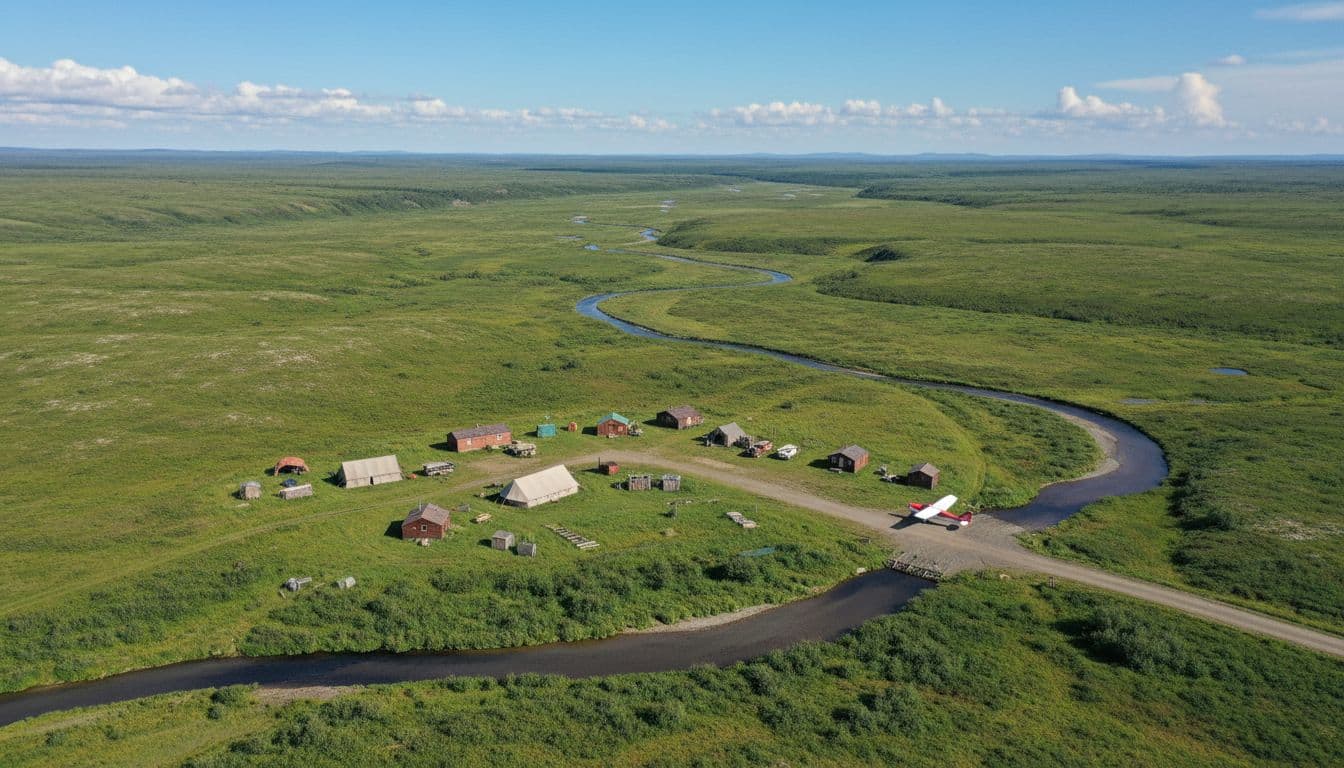
Kavik River Camp may be the more interesting piece. It’s part survival outpost, part tourism draw, and part symbol of her whole public image. That matters because fans don’t just watch Sue, they buy into the idea of Sue. Even so, remote Alaska businesses aren’t cheap to maintain. Flights, supplies, fuel, repairs, and weather can chew through revenue fast.
Sue’s wealth looks less like Hollywood glitter and more like hard-earned Arctic cash flow.
So while TV gave her visibility, the camp gave her something better, a real-world asset tied to her name.
Life Below Zero fame, personal updates, and why the number stays modest
Part of Sue’s appeal is that her life never felt staged like a glossy reality show. She survived a bear attack in 2007 and handled the aftermath alone for hours. That kind of story sticks with viewers. It also explains why her brand has staying power.
Her public timeline has had rough patches too. In 2017, she sued producers connected to the show over safety concerns. Even with that fight, she remained linked to the franchise for years. Drama may sell headlines, but it doesn’t always grow a bank account.
As of March 2026, the latest public updates suggest her life is steady rather than splashy. She’s widely described as widowed, a mother of two, and in a relationship with Michael G. Heinrich. Reports also say she still spends much of her time in Alaska while hosting camp visitors. A recent wealth summary tied to her biography and camp life paints a similar picture.
Her expenses matter too. Living and working in remote Alaska is not cheap, and upkeep can eat cash faster than fans assume. When a business sits far from roads and cities, every repair and supply run can feel like paying city prices with wilderness chaos piled on top.
That’s the key point. Sue is famous, but she’s famous for toughness, not mass-market celebrity. She isn’t built for perfume ads or stadium tours. Her fame sits in a smaller lane, and that lane pays less. On the other hand, it can last longer because fans trust it.
So if you’re expecting a giant celebrity fortune, this isn’t that story. Sue Aikens net worth in 2026 looks like the result of years of work, smart use of television exposure, and a business planted in one of the harshest places on Earth.
The final number
Strip away the hype, and the most believable estimate is $650,000 in 2026. That number fits the reported range, her TV earnings, and the realities of running Kavik River Camp. In short, Sue built a respectable fortune the same way she built her reputation, with grit, risk, and zero interest in being ordinary.
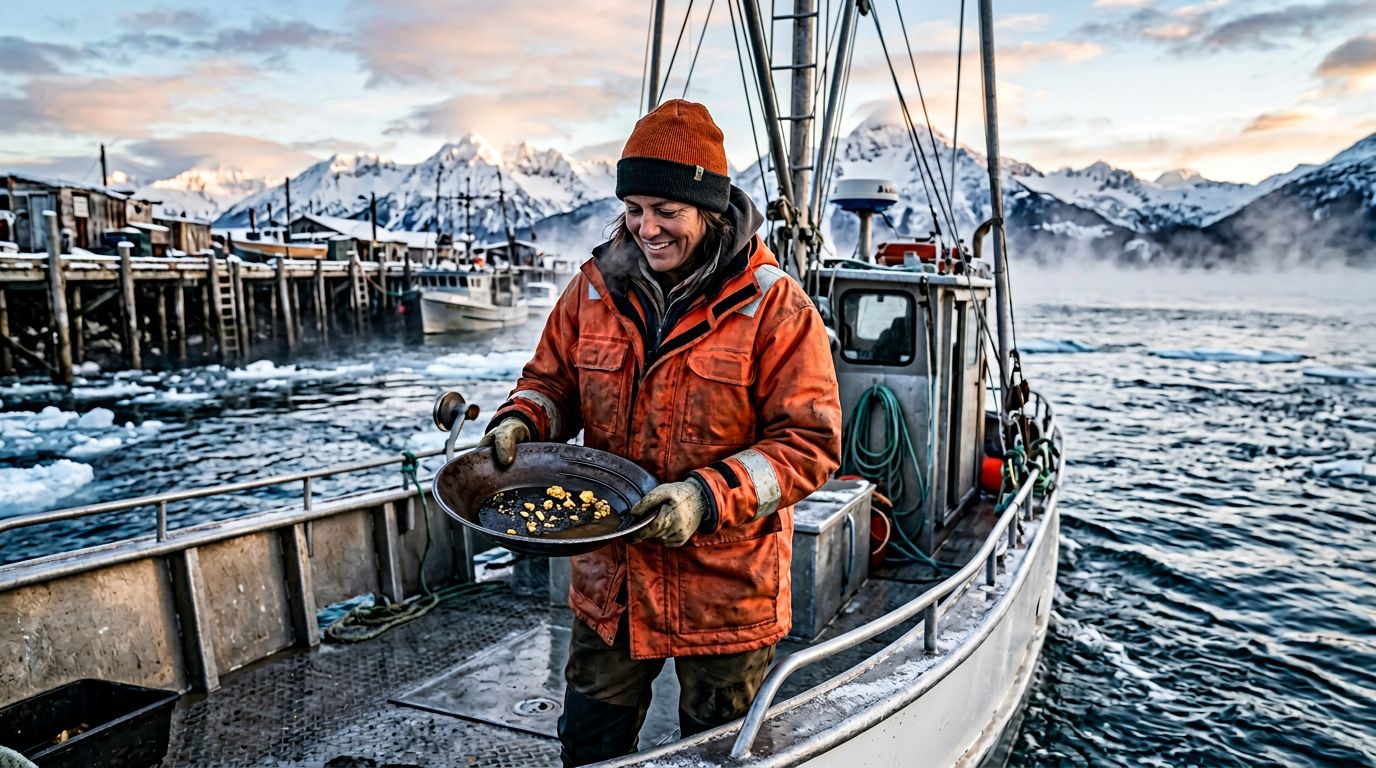
If ever there was a reality TV paycheck earned the hard way, it’s Emily Riedel’s. Cold water, busted gear, and the Bering Sea don’t hand out easy money. Based on public estimates, reported episode pay, and her newer business moves, Emily Riedel net worth in 2026 looks closest to $400,000.
That’s not movie-star money. Still, it’s real work-boot wealth, built from mining, TV, and a sharp move away from network control.
Emily Riedel net worth in 2026, the best estimate
Most public estimates still sit near $350,000, while wider guesses run from $250,000 to $600,000. A fair 2026 number is $400,000. That split-the-middle estimate fits her mix of TV income, equipment value, and newer direct businesses.
Why not leave it at $350,000 flat? Because 2026 Emily isn’t only the familiar face from Discovery. She still works the Bering Sea, she controls more of her output, and gold prices have stayed strong through the mid-2020s. When a miner stops sharing so much upside, the math can improve fast.
Net worth also isn’t a paycheck. It includes hard assets, cash flow, and debt. For someone in mining, that picture gets messy in a hurry. A dredge can be an asset one day and a wallet-drainer the next.
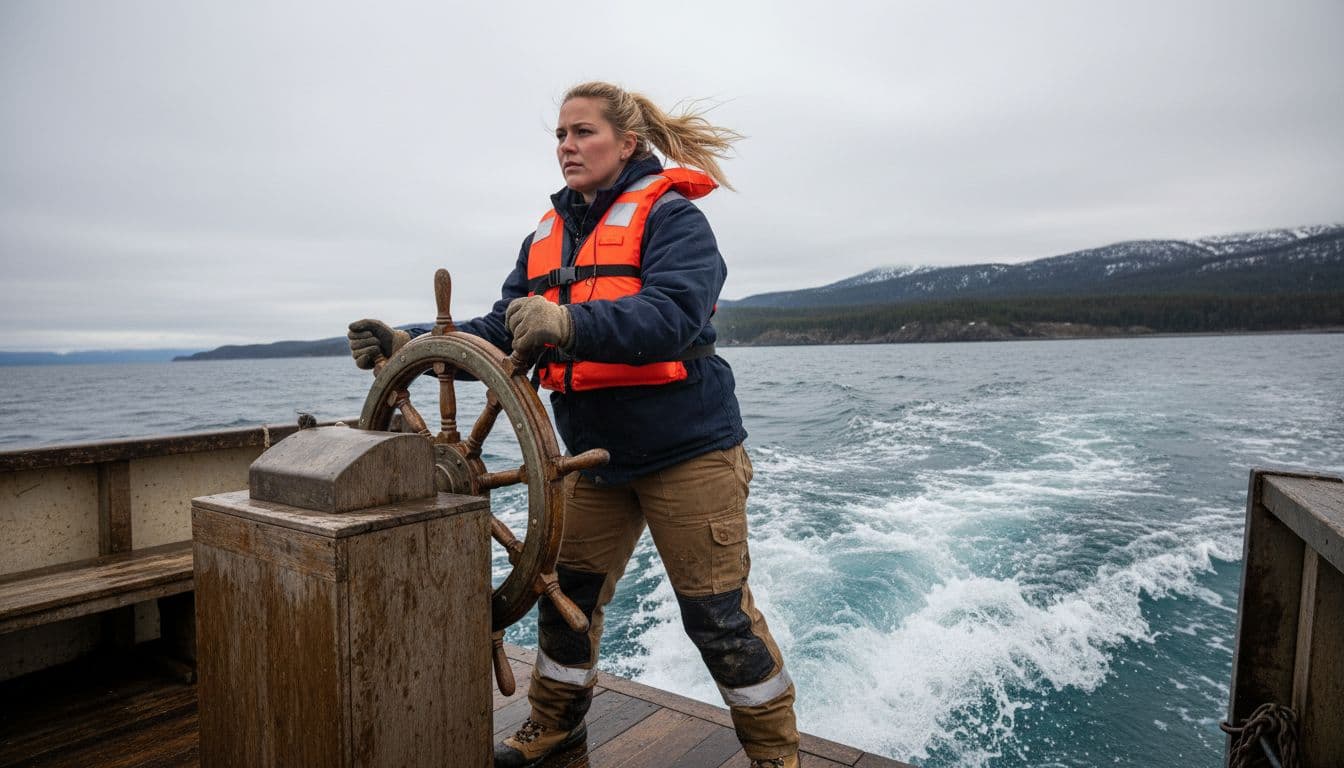
Emily built her public brand as the standout female dredge captain on Bering Sea Gold. That visibility helped, yet it never made her a standard TV celebrity. Earlier coverage, like SoapCentral’s net worth recap, has placed her in the modest reality-star bracket, which lines up with the show’s niche fame and Alaska-sized expenses.
Why the number isn’t sky-high
Mining looks rich on camera. In real life, it burns cash. Fuel, repairs, dive gear, crew wages, permits, and weather delays all take their cut. So even if the gold jar looks great at the end of an episode, the profit can shrink fast once the bills show up.
Emily Riedel’s Bering Sea Gold pay breakdown
Her Discovery pay is the cleanest number on the board. Reported estimates place Emily between $10,000 and $25,000 per episode. With a 10 to 12 episode season, that puts her gross TV pay around $120,000 to $300,000 for a good run.
This quick table shows where her money likely came from:
| Income source | Estimated amount | Why it matters |
|---|---|---|
| Discovery salary | $10,000 to $25,000 per episode | Reliable TV income and visibility |
| Full season TV total | About $120,000 to $300,000 | Based on roughly 10 to 12 episodes |
| Gold mining on Eroica | Variable, often five figures to low six figures | Biggest upside, biggest risk |
| Pay dirt, gold sales, YouTube | Growing side income | More control, better long-term margin |
The takeaway is simple: TV gave Emily steady checks, but mining gave her the bigger upside.
Still, the show salary wasn’t pure profit. Taxes bite. So do downtime, travel, and the simple fact that reality TV checks don’t fix a busted boat. That’s why some fans hear “$25,000 per episode” and picture instant millionaire money. The Bering Sea laughs at that idea.
Her dredge, the Eroica, matters more than a cast credit. If she has a strong season, the gold she keeps can outpace TV income. On the other hand, one ugly stretch of weather can turn a promising haul into a season of patch jobs and crossed fingers. Public roundups such as this Bering Sea Gold cast pay roundup point to the same pattern.
The shiny truth, her wealth comes from ownership and gold recovery, while TV works more like an amplifier.
After the show, Emily changed the math
Her money story changed in 2025. Emily retired from appearing on Bering Sea Gold in January of that year after about 12 years on the series. Since then, reports say she has kept mining independently, posts her own videos to YouTube, and shifted toward businesses she controls more directly.

That move could help her net worth more than another season on cable. Fame is useful, but ownership is better. Emily and her husband Alex have been tied to a Bering Sea pay dirt business, and she has also been linked to direct sales of small amounts of Alaskan gold. Those side lanes may sound tiny, yet they add up because the margin is hers.
Recent writeups, including this Emily Riedel life update, also describe her raising a daughter and splitting time between Nome and Homer. That’s a lot to juggle. Even so, it fits the bigger picture. She isn’t retiring from mining. She’s just cashing in on it differently.
There’s also a practical upside. When she films her own content and hosts mining experiences, one good season can create income more than once. First from the gold, then from the story around it. That’s a smart pivot, and it’s the main reason a $400,000 estimate feels more realistic than the older figures still floating around online.
The final tally
So, what’s the cleanest answer? Emily Riedel net worth in 2026 is best estimated at $400,000. Her old Discovery salary mattered, but it wasn’t the whole treasure chest. The real engine is mining, plus the fan-facing businesses she now controls. That’s not flashy Hollywood cash, it’s harder-earned than that, which honestly makes it more interesting.

Jake Anderson Net Worth 2026: What the Deadliest Catch Captain Really Makes
TV fame can make anyone look richer than they are. Jake Anderson is the perfect reality check. The Jake Anderson net worth story in 2026 is less red-carpet sparkle and more crab pots, diesel bills, and cold, hard risk.
Based on public estimates, captain pay data, and the financial hit tied to losing the Saga, a fair March 2026 estimate for Jake Anderson is about $1.9 million. That’s strong money, but it’s not private-island money. His wealth comes from fishing, TV, and years of surviving one of the roughest jobs on screen.
Jake Anderson net worth in 2026, the fairest estimate
Most public estimates place Jake between $1.8 million and $2 million. Split the difference, and $1.9 million looks like the cleanest number.
Why not higher? Because net worth isn’t the same as “what a guy on TV gets paid.” A crab captain can have a big season and still watch cash fly out the door. Fuel costs bite. Repairs bite harder. Crew shares, permits, gear, taxes, and debt all take their turn too.
Jake has built a long career, though. He’s been part of Deadliest Catch since 2007, and he grew from deckhand to captain in full view of the audience. That kind of run matters. Longtime cast members usually have steadier TV income than newer faces, and Jake’s name carries weight with fans of the show.
He also comes from a fourth-generation fishing family, which adds real trade value beyond the cameras. He’s not a celebrity who wandered onto a boat for content. He’s a fisherman first, then a TV personality second.
Big fame doesn’t always create giant wealth when your day job can burn cash as fast as it earns it.
That’s why the $1.9 million estimate feels right. It gives him credit for years of TV exposure and captain-level earnings, while staying honest about the brutal economics of commercial fishing.
Deadliest Catch income breakdown, where the money actually comes from
Jake’s income has two engines, the boat and the show. Together, they make a solid machine. Separately, each one can wobble.
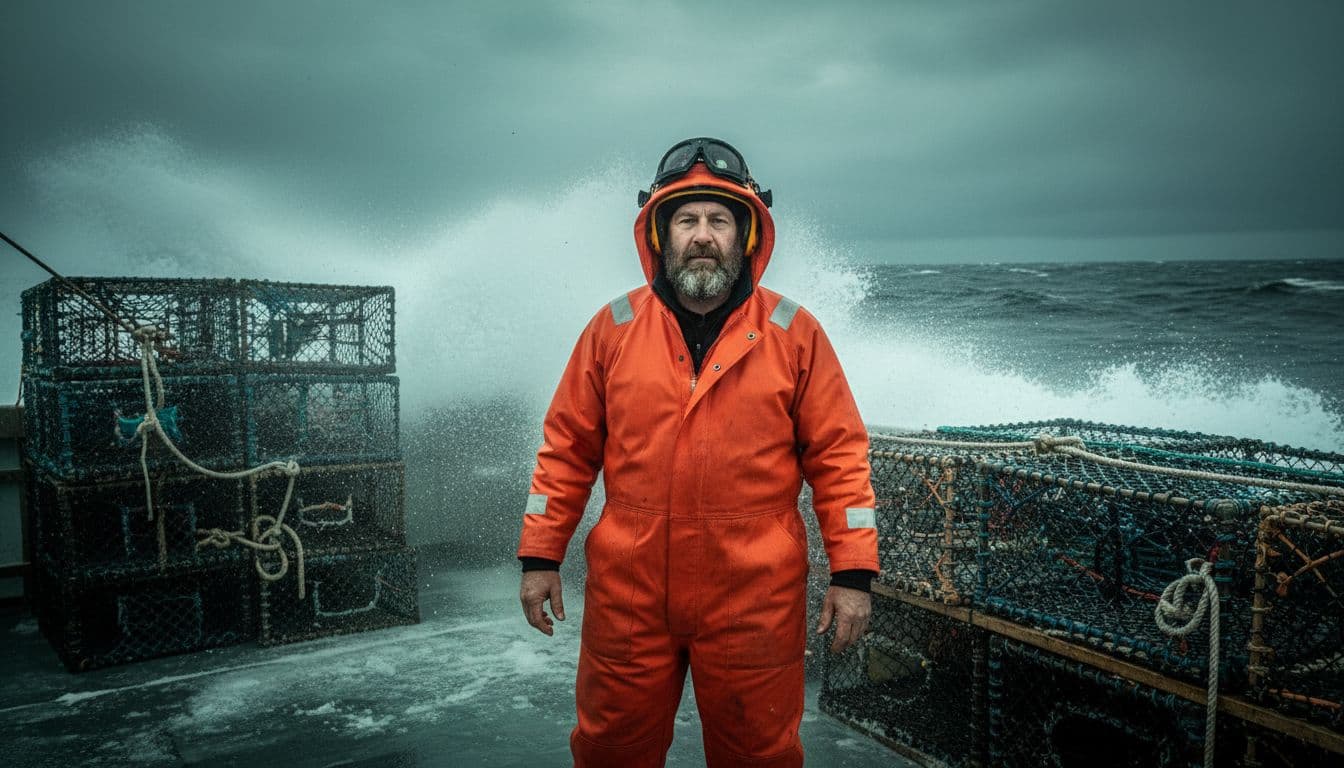
On the fishing side, captains like Jake can reportedly make around $150,000 to $170,000 per season from catches in a good year. That sounds huge, and it is, but it’s also seasonal, volatile, and tied to quotas, weather, and boat expenses.
Then there’s the TV money. Jake has said captains can earn good money from the series, a point echoed in this IMDb report on captain pay. His exact rate isn’t public. Still, for a veteran captain with years on the show, a reasonable estimate is high five figures to low six figures per season.
Here’s the simplest way to look at it:
| Income source | Estimated range | Why it matters |
|---|---|---|
| Crab fishing captain earnings | $150,000 to $170,000 per season | Main real-world income stream |
| Deadliest Catch TV pay | $75,000 to $150,000 per season | Longtime cast status likely helps |
| Appearances and misc. media work | $10,000 to $25,000 annually | Smaller add-on, not the core |
The takeaway is pretty clear. In a strong year, Jake could bring in roughly $235,000 to $345,000 before taxes and other costs. In a weaker year, that number can drop fast. A rough season at sea doesn’t ask for permission.
Think of it like a slot machine made of steel and salt water. When it hits, it hits. When it doesn’t, the repair bill still shows up.
Boats, setbacks, and why the Saga changed the math
If you want to know why Jake isn’t sitting on a much bigger pile of money, look at the boats.
Jake was captain and part owner of the F/V Saga through a big chunk of his run, from seasons 11 through 19. Boat ownership can be where a working captain starts building real wealth. It’s the difference between earning a paycheck and holding an asset.
Then came the bad turn. The Saga was reportedly repossessed in 2024 after money problems tied to co-owner Lenny Herzog. That matters a lot for net worth. Losing a vessel isn’t like losing a used pickup. It can wipe out equity, future income upside, and a big piece of financial stability all at once.

By season 21, Jake had moved on to captain the F/V Titan Explorer, working tough grounds near Adak for red king crab. That keeps the income flowing, but it doesn’t erase the hit from losing the Saga.
The risk factor also stays sky-high. The Deadliest Catch universe never stops reminding viewers how dangerous this life is, and this recent Deadliest Catch tragedy report underlines that reality. These guys earn every dollar.
There’s also no public sign that Jake has padded his fortune with a giant real estate portfolio or flashy outside businesses. So, the smart estimate stays grounded. He’s wealthy by normal standards, sure. He’s just not playing the same game as a scripted-TV star with syndication checks and brand deals raining from the sky.
The bottom line on Jake Anderson’s 2026 fortune
So, what is Jake Anderson net worth in 2026? The best estimate is about $1.9 million.
That number makes sense because it reflects both sides of his story, long-running TV fame and the harsh money math of commercial fishing. His income is real, his setbacks are real, and that’s what makes the figure believable. In short, Jake’s fortune is impressive because he earned it the hard way, one rough season at a time.

Living off-grid in Alaska isn’t exactly a “clip coupons and call it a day” situation. Jessie Holmes has spent years making the wilderness look like a tough, cold workplace, because for him, it is.
So what’s Jessie Holmes net worth in 2026, and how does a guy known for sled dogs and survival actually stack cash? The answer comes from a mix of TV money, race payouts, and real-world work that doesn’t stop when cameras do.
Let’s break down where the money likely comes from, what changed after Life Below Zero, and why a big dog team can eat up profits faster than you’d think.
Jessie Holmes net worth in 2026 (and why it’s a moving target)
As of March 2026, Jessie Holmes’ net worth is best estimated at $800,000.
That number sits in the middle of the most common public estimates (often reported in the $500,000 to $900,700 range across various profile roundups). Those lists aren’t perfect, but they give a solid lane to drive in. For a broader snapshot of how Life Below Zero cast members compare, see TheThings’ cast net worth ranking.
Here’s the tricky part: Jessie’s finances don’t behave like a normal celebrity’s. He’s not doing red carpets, brand tours, and weekly sponsored posts. His life is more like a pickup truck with a toolbox in the back. Money comes in, then money goes right back out into fuel, gear, repairs, and dog care.
Also, net worth is not the same as income. Net worth is what you keep after debts and expenses, plus whatever assets you own (equipment, property, savings). For someone off-grid, “assets” can look like practical tools, not shiny investments.
To make it easier, here’s a realistic 2026-style income snapshot based on reported pay figures, recent race winnings, and common costs for mushers and remote living.
| Income stream (2026 view) | What it includes | Estimated annual range |
|---|---|---|
| TV and media | Past Life Below Zero pay, possible rerun-related income, interviews | $0 to $30,000 |
| Racing winnings | Iditarod and other races | $20,000 to $80,000 |
| Carpentry and building | Cabin and boat work, local jobs | $40,000 to $120,000 |
| Sponsorships and appearances | Gear sponsors, events, speaking, promo | $10,000 to $60,000 |
Takeaway: Jessie’s wealth is built on multiple smaller pillars, not one mega paycheck.
Life Below Zero income: what Jessie Holmes likely made on TV (and why it tapered off)
For years, Life Below Zero was Jessie’s biggest visibility booster, and probably his most predictable check. Reported figures floating around online often peg his pay at about $4,500 per episode. If you stack that against a multi-season run, it adds up quickly in gross earnings.
Still, reality TV pay isn’t magic money. It’s more like seasonal work with a spotlight. Some years pay better than others, and screen time can change. A strong season can mean steady income, while a quiet year can feel like the faucet got turned down.
Several online bios also say his run on the show ended around 2023, which matches the general chatter in cast updates and fan tracking pages. If you want the kind of background page fans often reference, here’s one example: TheCelebsInfo’s Jessie Holmes profile. (As always, treat third-party cast summaries like a map, not a sworn statement.)
What happens after the cameras pull back? Two things:
First, the “fame engine” slows down. That can reduce appearance requests and easy media money.
Second, his lifestyle still costs what it costs. Dogs still eat. Snowmachines still break. Gas still hurts.
TV money can start the fire, but in Alaska, the day-to-day work keeps it burning.
So in 2026, Jessie’s net worth story is less about TV checks and more about what he does with his name and skills now.
The mushing money: Iditarod winnings, attention spikes, and the cost of a dog team
If Jessie Holmes were a stock, the Iditarod is the kind of headline that makes the price jump overnight.
Public reporting in early 2026 points to a huge moment: Jessie Holmes winning the 2026 Iditarod, with prize money reported at $57,200, plus extras like gold nuggets and salmon. That’s not just a cool trophy story, it’s real cash, and it’s the kind of win that can bring sponsor calls back to life.
He also reportedly placed 3rd in 2024, with winnings reported around $43,400. Competitive mushing can be one of the few times an off-grid athlete gets a clean, public number tied to their performance.

Photo by Lindsey Willard
Now for the part fans forget: running a big team is expensive. Jessie has been described as keeping around 40-plus dogs, and that’s basically like managing a small sports franchise where everyone needs food, medical care, training time, and gear.
Common cost buckets include:
- Dog food (a lot of it), plus supplements during training season
- Vet bills and preventative care
- Booties, harnesses, lines, sled maintenance
- Fuel and transport costs
- Cold-weather equipment that wears out fast
So yes, a big win matters. But it also helps cover what it takes to keep competing.
For a quick bio-style summary of Jessie as both TV personality and musher, Saint Augustine’s write-up reflects the public perception of his career mix (TV plus racing).
Off-camera income: carpentry, local work, and why “simple living” isn’t cheap
When Jessie isn’t racing or filming, he’s still working. Multiple profiles describe him as a carpenter who builds cabins and takes on practical projects. That kind of income is less flashy than TV, but it can be steadier, especially in a place where skilled labor is always needed.
Carpentry also fits his brand in a way that feels real. He’s not selling a fantasy. He’s selling proof that he can build, fix, and survive.
His location and lifestyle also hint at why his net worth stays reasonable instead of skyrocketing. Off-grid living can lower some costs (no fancy rent, fewer “city” temptations), but it raises others. Fuel, repairs, and transport can hit hard. Plus, equipment isn’t optional when winter shows up like a bully.
Relationship-wise, he’s often described as single, and he keeps personal details fairly quiet in most public bios. That privacy probably helps him stay focused, and it definitely keeps gossip sites hungry.
Put it all together, and his 2026 financial picture looks like this: a working guy with a public name, a serious sport, and real expenses that never take a day off.
Conclusion
Jessie Holmes’ money story in 2026 isn’t a fairy tale, it’s a spreadsheet with snow on it. With a best estimate around $800,000, the Jessie Holmes net worth conversation comes down to TV income history, race winnings, and steady carpentry work, minus the very real cost of keeping a dog team healthy and competitive. If he stays on his current track, the next few racing seasons could matter even more than his TV years. The real question is simple: how long can he keep turning hard living into smart earning?
-
 Celebrity Info2 months ago
Maya Oakley: A Journey of Lifestyle and Resilience in the Face of Illness
-
 Celebrity Info3 years ago
Shane Oakley: Dr. Michelle Oakley’s Family-Oriented Husband and Sports Enthusiast
-
 Celebrity Info3 years ago
Carl Rosk From Gold Rush | What Happened To Him?
-
 Celebrity Info3 years ago
Freddy Dodge Net Worth, Personal Life, Passions, and Role in Gold Rush
-
 Celebrity Info3 years ago
Mitch Blaschke Net Worth – Age, Personal Life and Role in Gold Rush
-
Celebrity Info2 years ago
Josephine Archer Cameron – Daughter of the Famous Movie Maker James Cameron
-
 Celebrity Info3 years ago
Tyler Mahoney Net Worth, Relationship with Parker Schnabel, And Role in Gold Rush
-
 Celebrity Info3 years ago
Chris Doumitt Age, Wife, Net Worth and Role in Gold Rush