
Celebrity Info
Parker Schnabel Net Worth in 2026: Gold Rush Pay Breakdown and Where the Money Really Goes


Parker Schnabel Net Worth in 2026: Gold Rush Pay Breakdown and Where the Money Really Goes
How does a guy go from learning the ropes under his grandfather John Schnabel at the Big Nugget Mine in Haines Alaska to becoming a famous reality television star and the face of a Discovery Channel TV gold empire? Simple: Parker Schnabel + big risks + bigger machinery + cameras that never blink.
As of early 2026, Parker Schnabel net worth estimates hover around $10 million. That number isn’t just TV money. It’s also years of mining wins, expensive mistakes, and reinvesting like a man who treats profits as fuel, not trophies.
Let’s break down what Parker likely makes from Gold Rush, what he earns from mining, and why “net worth” doesn’t mean he’s swimming in cash like Scrooge McDuck.
Parker Schnabel net worth in 2026: the estimate and why it jumps around
Most current estimates put Parker at about $10 million in 2026. That’s the clean headline number you’ll see repeated, even though the real story is messier (and more interesting). Some outlets still peg him lower, while others push higher depending on how they treat his mining assets and TV checks. For example, Marca’s net worth rundown lands in the same general neighborhood as other recent tallies.
So why do these estimates swing?
First, Parker’s wealth isn’t built like a typical celebrity’s. He started in the family business under his grandfather but transitioned to becoming an independent operator after leaving that mine. Actors stack paychecks. Miners stack equipment, leases, and inventory, and then burn money on fuel like it’s a hobby. As an independent operator running large-scale mining operations in placer mining, which involves extracting gold from alluvial deposits using water-based methods, costs can eat a scary chunk of revenue even when gold prices are strong.
Second, “net worth” includes assets that are not liquid. A wash plant is valuable, but you can’t pay a restaurant bill with a conveyor belt. His current scale means maintaining multiple wash plants and other heavy assets, unlike the family business setup he grew up in.
Quick reality check: net worth is the value of everything you own minus what you owe, not the cash sitting in your bank account.
Third, Parker’s career has a reinvestment loop baked in. He’s known for scaling up operations, which often means pouring profits right back into dozers, excavators, payroll, and land access.
Put it together and a $10 million estimate in 2026 makes sense as a blended number, combining TV earnings, mining upside, and hard assets, while also accounting for the constant cash drain that comes with industrial mining.
Gold Rush salary in 2026: per-episode pay, spin-offs, and the “it depends” factor

Photo by Lucia Barreiros Silva
Here’s the part everyone wants: what does Parker make from Gold Rush?
Across entertainment reporting, Parker’s Gold Rush salary per episode is often cited in a reported range of about $25,000 to $50,000, with some chatter going much higher for top talent in certain seasons or deals. A widely shared example of this salary talk appears in features like PrimeTimer’s look at Parker’s salary and net worth. Other summaries also circle similar numbers, including this IMDb profile-style net worth explainer.
Still, reality TV contracts can be complicated. Pay depends on screen time, seniority, bonuses, and whether someone has producer credits. Parker famously used his college fund to start his own mine, highlighting his early commitment to the industry.
To make the math feel real, here’s an illustrative breakdown using a 15-episode season example (not an official episode count, just clean math):
| Pay talk (reported/rumored) | Estimated salary per episode | Example total for 15 episodes |
|---|---|---|
| Conservative reported range | $25,000 | $375,000 |
| Commonly cited upper range | $50,000 | $750,000 |
| High-end rumor zone | $100,000 | $1,500,000 |
The takeaway: even at the conservative end, Gold Rush can be a serious income stream. At the higher end, it starts looking like pro-athlete money (with more mud and fewer stadium lights).
Parker also has spin-off value. Gold Rush: Parker’s Trail gives him extra visibility, and in TV, visibility often equals more negotiating power. His influence could position him for an executive producer role down the line, similar to other reality stars. Add in possible production fees, appearance bumps, and season-to-season raises, and his TV earnings likely stack up to millions over the full run.
Mining profits vs. mining chaos: what Parker keeps after the gold dust settles
TV checks are nice, but Parker’s core business is still his complex mining operations in the Yukon. That’s where the big numbers show up, and where the big bills show up too.
On the show’s recent seasons, Parker’s goals have been massive, including talk of chasing five-figure ounce totals in a season. Unlike the 1,000 ounces of gold targets set by peers like Tony Beets or Rick Ness in the Klondike region, Parker’s ambitions draw headlines screaming “tens of millions,” such as “$13 million worth of gold” from a banner season. But that’s gross value, not profit.
Mining works like a restaurant with monster overhead. Sure, the menu prices look great, until you remember rent, staff, supplies, equipment repairs, and the fact that something always breaks at the worst time.
Here’s where the money goes before Parker can call it “income”:
- Land and royalties: Claims, leases, and cuts to claim owners can bite hard.
- Fuel and logistics: Remote mining means constant hauling, constant fuel, constant pain.
- Labor and camp costs: Crews, housing, food, and payroll add up fast.
- Equipment and repairs: Wash plants, rock trucks, dozers, excavators, heavy machinery, and the never-ending maintenance.
- Reinvestment: Expanding capacity with heavy equipment can boost output, but it also eats cash.
This is why Parker’s net worth can rise even when his lifestyle looks pretty normal. He’s not flashing watches every episode. Instead, he tends to park money in the business, the equipment, and the next season’s push.
So what does that mean for 2026?
It supports a solid, headline-friendly estimate like $10 million, while also explaining why he probably isn’t sitting on $10 million in spendable cash, even after “$13 million worth of gold” hauls. His wealth is real, but a lot of it is bolted to the ground, parked in machinery, or committed to next season’s operating costs.
Conclusion: Parker’s rich, but it’s the messy kind of rich
In 2026, Parker Schnabel net worth sits around $10 million, built by this world-famous gold miner from Gold Rush pay plus his lengthy mining career. His TV salary likely lands in the mid-six to low-seven figures per season depending on the deal, while mining brings the big revenue and the bigger expenses. The fun twist is that Parker’s money doesn’t just sit there; despite his success, he has zero interest in a luxury home and instead recycles it all into equipment and expansion. Fans who’ve followed this gold miner’s life, from his time with Ashley Youle to prospecting with Tyler Mahoney on Parker’s Trail, know he prioritizes the dirt over the fame. If you had his bank app, it would probably look less like a flex and more like a business plan.

Cole Sturgis doesn’t make money the easy way. He cuts timber, flies around Alaska, and films a survival-heavy reality show that keeps fans watching.
That mix makes his income look more like a patchwork quilt than a tidy celebrity salary. If you’re wondering about Cole Sturgis net worth in 2026, the answer is clearer than you might expect, even if his life is miles away from normal.
Cole Sturgis net worth in 2026
The best estimate for Cole Sturgis’s net worth in 2026 is about $400,000. A fair range sits somewhere between $300,000 and $500,000, depending on how many seasons he has filmed, how steady his timber work is, and whether his online presence brings in extra cash.
That figure fits the kind of life he lives. Cole is not a splashy, high-visibility TV star with giant brand deals and a luxury-car parade. He is a working Alaskan dad with a job that depends on weather, distance, fuel, and grit.
The short version, Cole Sturgis’s 2026 net worth is best pegged at around $400,000.
That number also makes sense when you compare him with other reality TV personalities who do not live in major media markets. A cable show can pay well enough to matter, but it usually does not create instant wealth. The money helps, yet it does not erase the cost of living and working off the grid.
Cole’s value comes from more than screen time. He has a real trade, a real family life, and a real place in the show’s world. That gives him a steadier base than a one-season fame burst ever could.
How Life Below Zero: Next Generation pay likely works
The exact salary for Life Below Zero: Next Generation is not public, so the numbers have to be estimated. Still, the math is not hard to sketch out. For a recurring cast member on a cable docuseries, a few thousand dollars per episode is a realistic ballpark. If someone appears often, a season can add up fast.
Here is a simple way to think about his likely income mix in 2026:
| Income source | Why it matters | Rough 2026 estimate |
|---|---|---|
| Reality TV pay | Episodic or seasonal cast money | $25,000 to $75,000 |
| Timber cutting | Hands-on work in Alaska | $35,000 to $80,000 |
| Social media and YouTube | Small side income and visibility | $5,000 to $20,000 |
| Other seasonal work | Local jobs and odds and ends | $0 to $15,000 |
These are not exact payroll figures. They are a practical estimate based on the kind of work Cole does and the kind of show he is on.
The biggest point is simple. His TV pay helps, but it probably does not carry the whole load. A reality series like this is a nice engine, not a private jet. The stronger money story is the combination of TV, labor, and a lifestyle that keeps him visible.
That is why a figure around $400,000 feels right. It is strong for a niche reality personality, but it still sounds like a working person’s net worth, not a Hollywood jackpot.
The Alaska work that keeps the bills moving
Cole’s off-camera work matters because Alaska does not hand out easy shortcuts. Timber cutting is hard on the body, and it is not the kind of job where you clock in, sip coffee, and coast. It is physical, seasonal, and tied to a place where travel costs can eat into earnings fast.

A setup like that comes with its own bill stack. Fuel is expensive. Equipment needs repairs. Flights and boat trips cost money. In a remote place, even normal errands can feel like mini-expeditions.
That is one reason net worth estimates for Cole should stay grounded. A person can look camera-ready on TV while still dealing with very real expenses at home. The show may bring in income, but it also showcases a life that takes money to maintain.
There is another wrinkle here too. Because his work is tied to Alaska, income can swing from one season to the next. A solid year of filming and cutting wood can look very different from a slow year with weather problems or fewer episodes. So while $400,000 is a strong estimate, it should be seen as a living number, not a fixed trophy.
That is part of the charm, honestly. Cole’s story works because it feels practical. No glitter, no fake polish, just work that looks like work.
His floating home, family life, and public image
Cole Sturgis also stands out because his home life is unusual even by Alaska standards. He lives in Thorne Bay and has been shown living with his family in a floating house. A floating home on Prince of Wales Island drew attention from viewers who like their reality stars with a side of rugged scenery.
He is also a father of three, which adds another layer to the financial picture. Family life means more stability, but it also means more mouths to feed and more planning. In a remote setting, that planning gets serious fast.
Cole’s public image is tied to being hands-on and self-reliant. He hunts, fishes, cuts timber, and uses a plane to get around parts of Alaska. That kind of life plays well on television because it feels earned. Fans do not see him as a polished celebrity. They see him as someone who actually lives the material.
That matters for income too. A grounded image can keep a cast member relevant longer than a flashy persona. People trust what feels authentic, and networks like that kind of staying power. So do viewers who follow the drama with their morning coffee.
The show has also had its share of rough energy lately. Reality Blurred’s look at a tough year for the cast captured how much the series leans on real pressure, not staged chaos. That is a big reason Cole’s story keeps landing with fans. It feels lived-in.
What could change the estimate in either direction
Cole’s 2026 net worth could move up if he keeps showing up on screen, expands his online presence, or lands better side income from content and appearances. If a cast member stays visible long enough, the show can become a dependable income stream, and that helps build wealth over time.
It could also move down. Off-grid life is expensive, and expensive lives chew through money faster than fans often realize. A floating home, gear, transport, repairs, fuel, food, and family costs all add up. If there is debt tied to any of those things, net worth takes a hit.
One more thing matters here. Net worth is not the same as cash in the bank. A person can own equipment, a home setup, and a plane-related asset while still keeping a modest liquid balance. That is why celebrity net worth numbers always need a little common sense.
For Cole, the safest read is this. He has a solid six-figure net worth, but not a huge one. His money story is built on working hard in a place where comfort costs extra.
Conclusion
Cole Sturgis’s 2026 net worth lands at about $400,000, and that number fits the man. His money comes from a mix of Life Below Zero: Next Generation, timber work, and the kind of off-grid life that is anything but cheap.
He is not chasing glossy fame, and that is part of why people watch. His story feels real, his work looks hard, and his earnings match that grind. In the end, the paycheck follows the lifestyle, and Cole’s lifestyle does not cut corners.
Bear Brown has spent years on TV looking like he could wrestle a pine tree and win. That makes people ask the same question every time his name comes up: how much money does he actually have?
The short answer is that Bear Brown’s net worth in 2026 is best estimated at about $300,000. The longer answer gets messy fast, because reality TV pay is private and the Brown family has kept a lot of money talk off-camera.
So, if you want the cleanest number, start there. Then let the rumors do what they always do, spin in circles.
Bear Brown’s net worth estimate in 2026
Bear Brown is one of the most recognizable faces from Alaskan Bush People, but his finances are not posted on a public scoreboard. The most repeated 2026 estimate puts his net worth at around $300,000, and that is the figure that holds up best under scrutiny. Some online pages throw out much bigger numbers, but they rarely show a solid trail behind them.
Here is the quick version of how the guesses stack up.
| Estimate | Why it appears online | Confidence |
|---|---|---|
| $300,000 | Most repeated 2026 estimate | Highest |
| $300,000 to $5 million | Wide range found across gossip sites | Mixed |
| $40,000 to $50,000 per episode | Long-running cast pay rumor | Low |
The table tells the story pretty fast. The closer you stay to $300,000, the less you have to lean on wishful thinking.
That does not mean Bear is broke. It means his money picture looks more like a working reality TV veteran than a full-on mansion-and-helicopter celebrity. Net worth is a snapshot, not a trophy. A person can earn a solid paycheck and still end up with a modest total after taxes, time off, expenses, and normal life costs.
Some of the wilder online figures seem to mix up family fame with individual wealth. That happens a lot with reality TV. One person gets a big spotlight, then the internet inflates the number until it sounds like a casino jackpot.
What Alaskan Bush People may have paid
Pay on reality shows is a locked drawer. Nobody outside the contract room gets the real number, and that makes the Brown family a magnet for rumors.
A long-running fan thread about family pay keeps repeating a figure of $40,000 to $50,000 per episode for the Brown kids, including Bear. That number gets shared a lot, but it is still a rumor, not an official salary release.
If that estimate were true, even a short season would have brought in serious money. Ten episodes at that rate would look huge on paper. After taxes and real-life expenses, the finish line gets a lot less flashy.
The catch is that reality-TV pay changes over time. Early seasons usually pay less than later ones. Special episodes, returning seasons, and contract renewals can also change the math. So even if Bear made a strong paycheck during the show’s peak years, that does not lock in a permanent rate.
A lot of viewers assume TV money rolls in like clockwork. It usually does not. The check can be nice, then the show slows down, then the money pauses, and suddenly everyone is doing math in the comments.
Why the Brown family money is hard to map
Bear’s name gets tied to the whole Brown clan, and that muddies the water fast. Family-based reality shows often blur personal income, shared expenses, and group fame.
Reality TV money looks bigger from the couch than it does after taxes, travel, and long gaps between seasons.
A separate cast net worth thread on Reddit shows how wild the guesses can get. Some fans talk about the Browns like they’re sitting on hidden treasure. Others act like the money vanished the second the cameras stopped rolling. The truth usually lands somewhere in the middle.
Bear also has a public image that keeps him easy to spot. He is the rugged, loud, back-to-the-woods type that made the show memorable in the first place. That kind of persona helps with visibility. It does not automatically mean a giant bank account.

That image is part of the brand. It keeps him in the conversation. Still, being famous for living rough is not the same thing as being rich enough to ignore the electric bill.
The Brown family also spent years dealing with a very public, very messy life story. That kind of attention can boost name value, but it can also drag money talk into the weeds. Once that happens, every estimate starts to sound bigger or smaller depending on who is guessing.
Other ways Bear Brown could bring in money
TV pay is usually the headline, but it is rarely the whole story. Reality stars sometimes make money through appearances, social posts, small promotions, and one-off projects tied to their name.
For Bear, those side streams are probably smaller than his show income. He is better known as a raw, outdoorsy TV personality than as a glossy brand machine. That means the extra money is likely useful, but not huge.
That matters because a $300,000 net worth can still look decent if spending stays under control. A lot of celebrity money stories fall apart when people assume fame equals endless cash. It doesn’t. Plenty of TV personalities live on a mix of old episodes, new gigs, and the hope that another season shows up.
The breaks between seasons matter too. When a show slows down, the money usually slows down with it. That can make one strong year look a lot bigger than the long-term picture. A high episode paycheck sounds great, but it does not build itself into a lifetime fortune by magic.
So if Bear Brown had a good run on television, that fits the numbers. If he kept his lifestyle fairly grounded, that fits too. The estimate does not need fireworks to make sense.
Is Bear Brown rich, or just well-known?
If you use the most defensible estimate, Bear Brown is comfortable, but not living in private-jet territory. A net worth of about $300,000 is solid. It is not the same thing as top-tier celebrity wealth.
The rumored $40,000 to $50,000 per episode figure sounds wild, and on paper it could build up fast. Still, TV money gets trimmed by taxes, fees, and plain old spending. Even a big check can shrink once life gets involved.
Bear’s money story is a good reminder that fame can fool people. A face on cable TV can look like a fortune. The actual numbers are often smaller, quieter, and much less glamorous.
That is why the Bear Brown net worth conversation sticks around. He has the look, the story, and the kind of TV history that makes people guess big. The public estimate says otherwise.
Conclusion
Bear Brown’s 2026 net worth is best pegged at about $300,000, with the higher online guesses looking shaky. The Alaskan Bush People pay rumor is flashy, but it has never been officially confirmed.
So the answer is simple, even if the gossip machine likes to stir the pot. Bear looks like the kind of guy who should have a massive TV fortune, but the public numbers point to a much smaller, more believable picture.
That is the odd little joke of reality TV money, it can look huge on screen and much smaller once the lights go off.

Bonnie Dupree doesn’t live like a standard TV celebrity, and that’s part of the appeal. As of May 2026, the best estimate for Bonnie Dupree net worth is about $1.5 million, built from reality TV, homestead life, and the family businesses around Alaska.
That number is not flashy, but it fits her world. Her money story is more wood stove than red carpet, and that makes it a lot more interesting than a clean, cookie-cutter celebrity estimate.
Bonnie Dupree’s 2026 net worth estimate
The cleanest public estimate is $1.5 million, with a realistic range of about $1 million to $2 million. That middle-ground number works because Bonnie has spent years tied to a long-running show, but she has never lived like a big-city brand machine.
Her income likely comes from a mix of reality-TV checks, the Kilcher homestead, and family-run cabin work. She also keeps a lower profile than many TV personalities, so there is less public proof of big endorsement money or fast cash side hustles.
Bonnie’s wealth looks more like a working homestead balance sheet than a Hollywood pile of cash.
That is why estimates around her vary. The public can see the show, the family, and the Alaska setting. What people cannot see is the full set of assets sitting behind it all. Land, family property, and long-term TV income do not always show up in neat headlines.
Still, the math points in one direction. Bonnie is not starting from zero, and she is not floating around on mystery money either. Her net worth in 2026 sits in a modest but solid range for a reality-TV figure who has stayed relevant for years.
What Alaska: The Last Frontier likely pays
Reality TV salary talk always gets a little squishy, but one cast-pay roundup on Tuko says the cast of Alaska: The Last Frontier makes about $7,000 to $10,000 per episode. That is a real paycheck, especially when the show keeps coming back season after season.
Bonnie does not seem to appear in every single episode like a full-time lead in a soap opera. Even so, a recurring role can still stack up well over time. A few episodes here, a full season there, and the numbers stop looking small.
A lot of fans also love arguing over the Kilcher family money online. A Kilcher salary breakdown video is a good example of how much curiosity still follows the family. The video chatter is not official payroll, of course, but it shows how hot this topic stays.
Here is the simplest way to think about Bonnie’s income mix:
| Income source | What it likely means | Rough impact |
|---|---|---|
| Reality TV pay | Public reports put episodes around $7,000 to $10,000 | Steady income that adds up over time |
| Homestead and cabins | Family land, rentals, and Alaska-based work | Long-term asset value and cash flow |
| Creative projects and appearances | Painting, small projects, and occasional public work | Smaller, but useful extra income |
The big point is simple. Bonnie’s TV pay is the easiest part to estimate, but it is probably not the only part that matters. The real value comes from years of staying on screen and staying tied to the family land.
Life on the homestead keeps the money picture low-key
Bonnie’s money story makes more sense when you look at where she lives. The Alaskan setting is not just a backdrop, it is part of the whole business. That kind of life brings visibility, but it also ties wealth to land, property, and family work.

That matters because homestead wealth does not always look glamorous. A cabin, a piece of land, or a family-operated business can be valuable without flashing like a sports car.
Alaska also keeps things honest. The weather is rough, the wildlife is huge, and every chore seems to need two extra tools and a lot more patience. A moose at sunrise might look peaceful, but it also reminds you that life out there is built around real property and real upkeep.
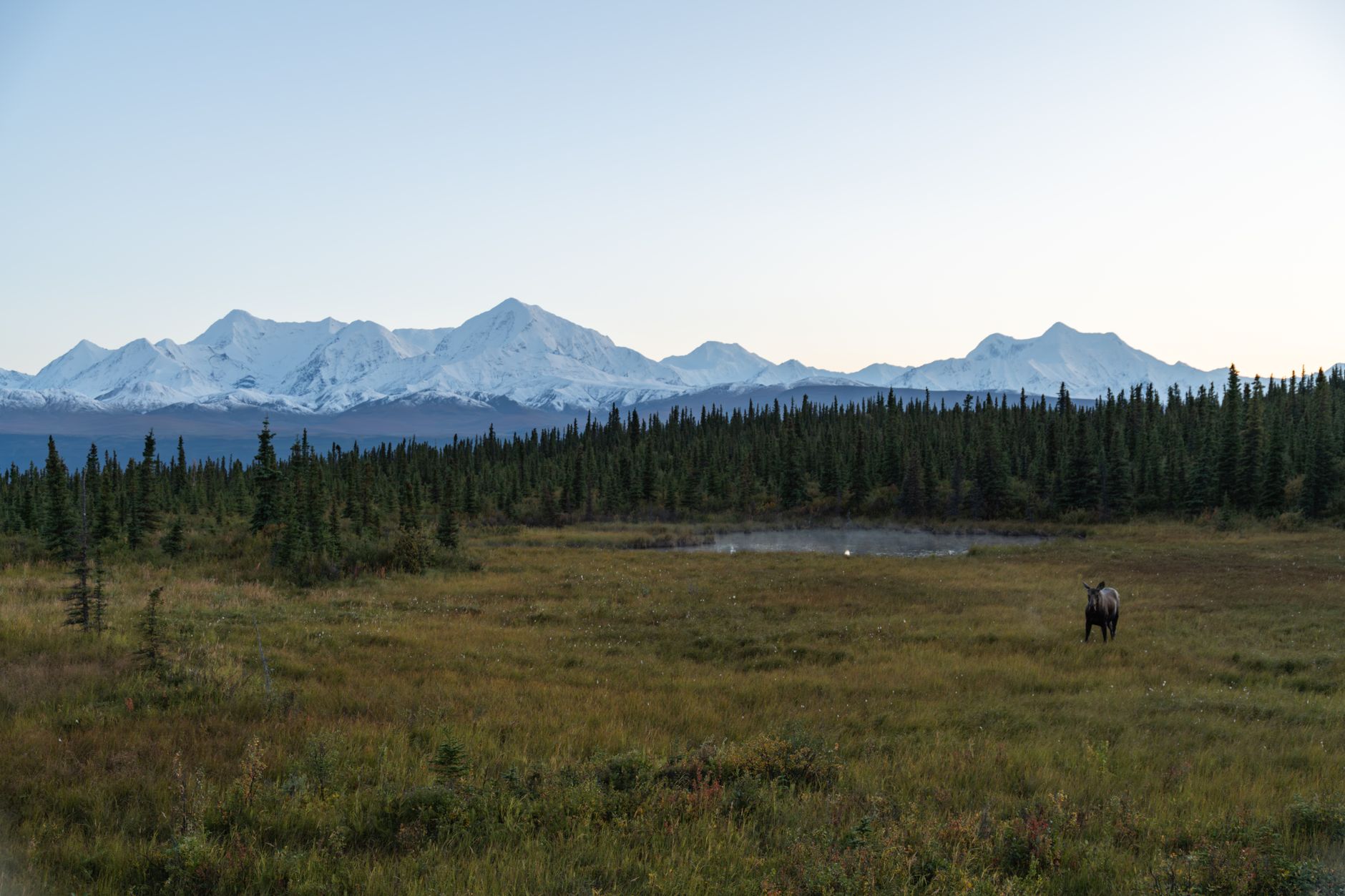
Photo by John De Leon
That kind of setting explains why Bonnie’s net worth stays hard to pin down. She is not the type to turn every meal into a sponsored post. She also does not seem interested in the loud, over-produced celebrity routine. That keeps her finances more private, but it also makes the estimate feel more grounded.
Her creative side adds another layer. Painting and other small projects help shape her public image, yet they do not seem like the main engine behind her income. The money still appears to come from the familiar trio: TV, land, and family work.
Why fans keep searching Bonnie Dupree’s net worth
Bonnie sits in a sweet spot for celebrity gossip readers. She is well known enough to matter, but private enough to keep people guessing. That combo sends search traffic through the roof every time her name comes up.
A lot of reality stars go hard on social media, and that makes their money easier to track. Bonnie is different. She stays closer to the homestead and farther from the endless self-promo loop. As a result, people have to work harder to estimate her finances.
The TV check is visible. The property, family work, and cabin income are where the real guesswork begins.
That is also why the smartest estimates stay conservative. If you only count the show, you miss too much. If you assume giant hidden riches, you start inventing things that are not there. The middle is where the truth usually hides.
By 2026, Bonnie still feels like one of those TV figures whose life is larger than the paycheck attached to it. The number matters, sure. The lifestyle matters more. Viewers keep coming back because her story still feels tied to Alaska in a real way, not a plastic, studio-built one.
Conclusion
Bonnie Dupree’s 2026 money story is not built on flash, and that is exactly why people keep asking about it. The best estimate is about $1.5 million, with Alaska: The Last Frontier pay, homestead assets, and family cabin income doing most of the heavy lifting.
She is a reminder that some celebrity wealth is hidden in plain sight. No giant showy rollout, no loud flexing, just a long-running series and a life that actually looks lived in.
For Bonnie Dupree, the numbers make sense because the lifestyle does too.
-
 Celebrity Info9 months ago
Maya Oakley: A Journey of Lifestyle and Resilience in the Face of Illness
-
Celebrity Info7 months ago
What Is Joe Bartolozzi Net Worth in 2026? The Realistic Estimate and How He Makes His Money
-
Celebrity Info7 months ago
Don Henley Net Worth 2026: Eagles Money Still Rolling In
-

 Celebrity Info8 months ago
Parker Schnabel Net Worth in 2026: Gold Rush Pay Explained (and the Mining Money Behind It)
-
Celebrity Info8 months ago
Don Felder Net Worth in 2026: The Eagles Guitarist’s Real Money Story
-
 Celebrity Info3 years ago
Kevin Beets: His Spouse, Net Worth, Family, Profession, and Role in Gold Rush
-

 Celebrity Info8 months ago
Linda Ronstadt Net Worth in 2026: The $130 Million Voice That Still Pays
-
shows-comics-novels8 months ago
Where Was The Big Bang Theory Filmed? The Real Sets, Backlots, and Pasadena Spots