
shows-comics-novels
What Is the Climax of Cinderella The Glass Slipper Scene Explained

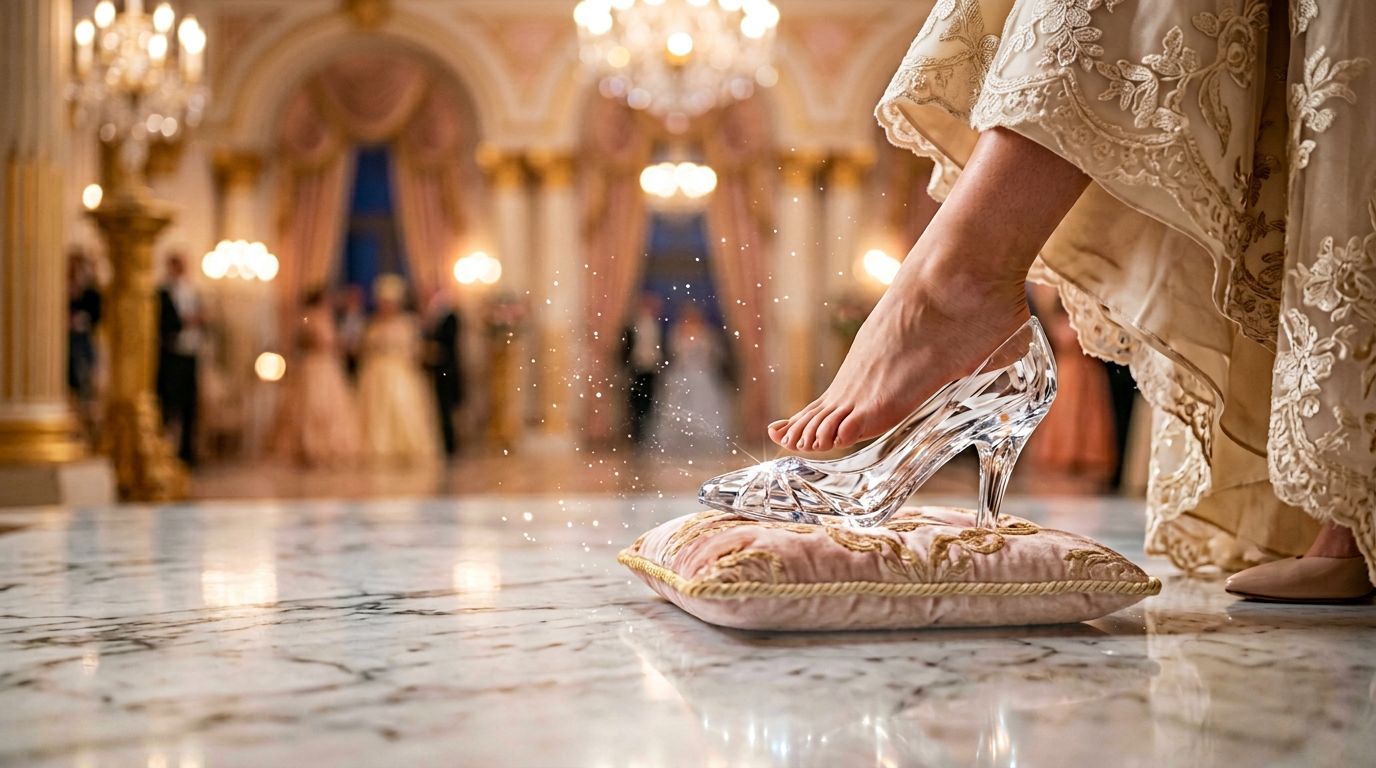
Fairy tales love a big reveal, and Cinderella delivers one of the most famous in fiction. If you’re trying to pin down the exact high point of the story, the short answer is simple: the climax happens when the glass slipper fits Cinderella.
That moment is where all the tension snaps tight, then finally lets go. A lot of people mix it up with the midnight escape scene, because that part is dramatic and flashy. Still, the real payoff comes later, when Cinderella’s identity is proven and everything changes at once.
The short answer: the glass slipper scene is the climax
In story terms, the climax is the moment of greatest tension. It’s the scene where the main conflict reaches its peak and starts to resolve. In the best-known version of Cinderella, that moment arrives when the prince tests the glass slipper, and it fits Cinderella perfectly.
Before that scene, the story keeps piling on pressure. Cinderella has already gone to the ball. She has already captured the prince’s attention. She has already rushed away at midnight, leaving behind the slipper. So now the whole kingdom is basically in full gossip mode, trying to find the mystery girl.
Then the prince comes to Cinderella’s house.
Her stepsisters try on the slipper first, usually with plenty of attitude and zero luck. Depending on the version, the stepmother tries to keep Cinderella hidden or stops her from trying the shoe. That delay matters, because it raises the tension. Readers know the truth, but the prince doesn’t yet.
The cinderella climax is the instant the glass slipper proves who she is.
Once Cinderella tries on the slipper and it fits, the central conflict breaks open. She is no longer the ignored girl stuck by the hearth. She is revealed as the prince’s chosen partner, and her stepfamily loses control over her.
This is why the scene lands so hard. It’s not only romantic. It’s also about identity, justice, and truth coming out in public. The hidden girl is finally seen. The mistreated girl is finally believed. The house that kept her small can no longer hold her back.
That mix of tension and release is exactly what a climax should do.
Why the midnight escape feels huge, but isn’t the climax
Now, let’s talk about the scene people often pick by mistake. Cinderella running from the ball at midnight is a major moment. It’s fast, emotional, and iconic. The clock strikes, the magic fades, and she bolts down the stairs. Very cinematic, very panic-filled, very “someone cue the orchestra.”
But it’s not the climax.
Why not? Because the main problem isn’t solved yet.
At midnight, the prince still doesn’t know who she is. Cinderella still goes back to her old life. Her stepfamily still has power over her. The story’s biggest question, will Cinderella be recognized and escape her miserable situation, is still hanging in the air.
That means the midnight scene works better as a turning point or the peak of the rising action. It kicks the story into its final phase. The lost slipper becomes the clue that leads to the real showdown.
Here’s a quick way to see the difference:
| Story part | What happens | Why it matters |
|---|---|---|
| Rising action | Cinderella goes to the ball and flees at midnight | Tension builds |
| Climax | The slipper fits Cinderella | Main conflict breaks |
| Falling action | The prince claims her, and her fate changes | The story settles |
| Resolution | Cinderella leaves for a better life | The ending feels complete |
So yes, midnight is a big deal. It’s the spark. But the slipper fitting is the explosion.
Think of it like a celebrity scandal reveal. The secret photo leaks at midnight, but the real climax comes when the truth gets confirmed on camera. That’s the moment everyone has been waiting for.
How the Cinderella climax changes the whole story
The reason the cinderella climax matters so much is that it changes every power line in the story at once.
Up to that point, Cinderella has almost no control over her life. Her stepmother gives orders. Her stepsisters mock her. Even when magic helps her, the help comes with a timer. She gets one beautiful night, then she’s right back in the ashes.
The slipper scene flips that pattern.
First, it proves Cinderella’s identity. No one can talk over the evidence. No one can pretend she doesn’t matter. The shoe fits, and that fact cuts through every lie in the room.
Second, it gives emotional payoff. Readers have watched her suffer for most of the story. They want release. They want justice. They want the smug people in the house to be wrong in the loudest possible way. The climax delivers that in one clean stroke.
Third, it locks in the story’s theme. Cinderella is not just about a dress, a dance, or a prince with excellent shoe memory. It’s about hidden worth. The tale says that kindness and dignity can survive cruelty. Then, at the climax, that inner worth becomes visible to everyone else.
After this scene, the rest is fallout. The prince takes Cinderella away. The future opens up. In some versions, the stepsisters face punishment. In softer retellings, the ending focuses more on Cinderella’s new life than on revenge. Either way, the biggest battle is already over once the slipper fits.
If you’re answering this in class, or just settling a random argument, you can say it in one line: The climax of Cinderella is the moment Cinderella tries on the glass slipper and proves she is the girl from the ball.
That’s the clean, correct answer.
The final answer in one sentence
So, what is the climax of Cinderella? It’s the scene where the glass slipper fits Cinderella, revealing her true identity and resolving the story’s main conflict.
Midnight gives the story its panic. The slipper scene gives it its payoff. And that’s why people still remember it, centuries later, like the fairy-tale version of a perfect red carpet reveal.
What Is the Climax of The Crucible? Proctor’s Big Choice Explained
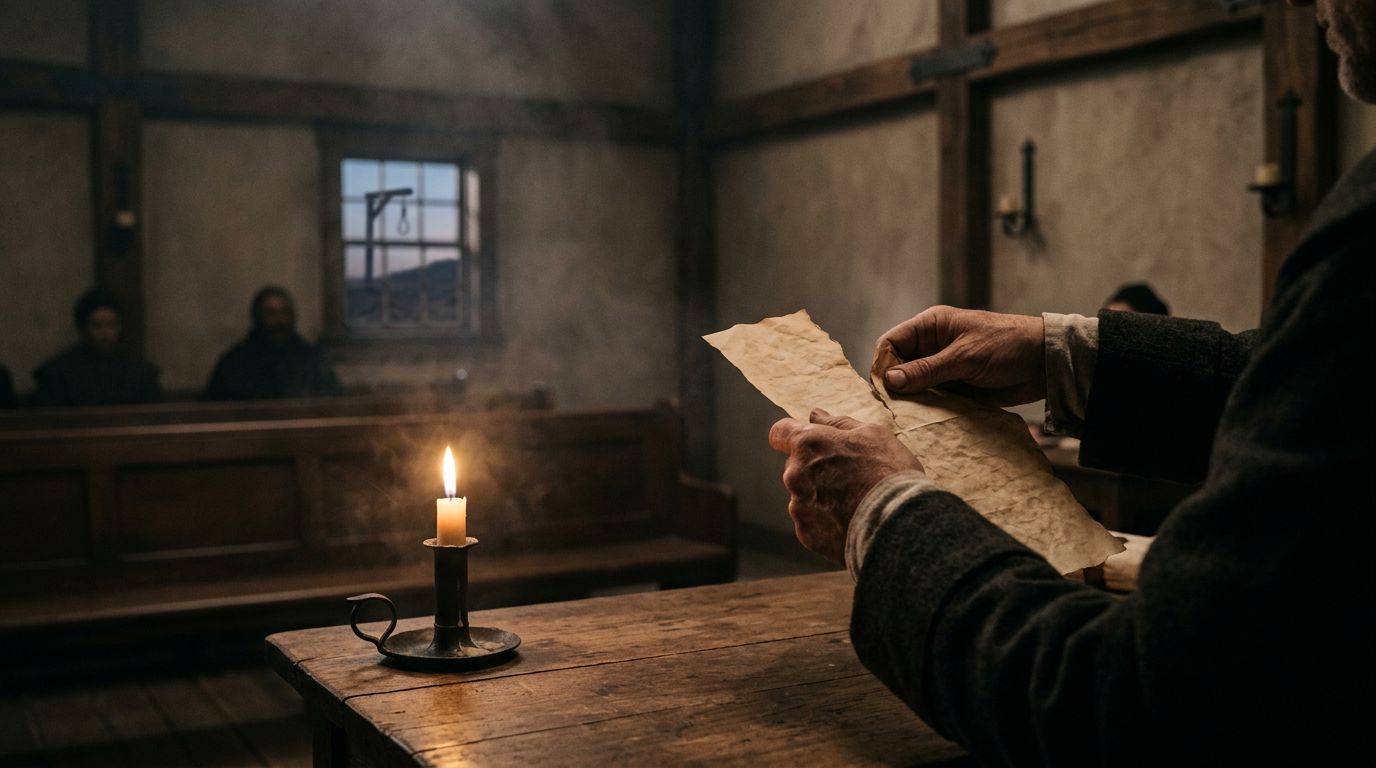
If you’re trying to answer what is the climax of The Crucible, here’s the clean, test-ready version: the climax happens in Act IV, when John Proctor tears up his false confession and refuses to save himself with a lie.
That scene hits like a slammed courtroom door. Everything in the play has been building toward it, the fear, the guilt, the lies, and the pressure to protect one’s name. Some readers pick the courtroom chaos in Act III, and that makes sense at first. Still, the true breaking point comes later, when Proctor makes his final choice and can’t take it back.
The short answer to what is the climax of The Crucible
The climax of The Crucible comes when John Proctor signs a confession, then rips it apart rather than let the court post it publicly. In plain English, he chooses death over a false admission of witchcraft.
By Act IV, Salem is a mess. People have been jailed, accused, and hanged. Reverend Hale has gone from confident expert to desperate wreck. Danforth still wants authority to look strong. Abigail has already run off. The whole town feels like a house fire that nobody can stop.
Then Proctor enters the scene. He’s tired, shaken, and ready to do almost anything to live. At first, he agrees to confess. That decision alone is painful, because he knows it’s false. Still, he wants more time, more life, maybe one last chance to hold on to something.
Then the court pushes too far.
They don’t just want a private confession. They want his signed statement nailed up for everyone to see. That’s when Proctor breaks, or maybe wakes up. He realizes the lie won’t only save his body. It will also destroy the last piece of himself he still respects.
His famous cry about his name is the key. This isn’t just pride. It’s identity, honor, and truth all rolled into one. In that instant, Arthur Miller brings the play’s biggest ideas into one sharp moment, public shame, private guilt, and the cost of standing up.
So, if someone asks for the crucible climax, this is the scene to name. It’s the play’s highest emotional point and its final moral showdown.
Why the courtroom scene feels like the climax, but isn’t
A lot of people point to Act III first, and honestly, that isn’t a wild take. The courtroom scene is chaos in full makeup. Mary Warren tries to tell the truth. Abigail flips the room upside down. Proctor admits his affair. Then Mary turns on him. It’s dramatic, ugly, and packed with tension.
So why isn’t that the climax?
Because that scene is the play’s major crisis, not its final turning point. It sends Proctor toward disaster, but it doesn’t settle his central struggle. Act III crushes his public case. Act IV settles his soul.
That’s the big difference.
In Act III, Proctor tries to beat the court with facts. He still thinks the truth, spoken clearly, might win. Salem proves otherwise. The judges believe the girls. Reason loses. Panic wins. From a plot angle, this is the moment where outside forces shut the door on him.
But the deeper conflict in The Crucible isn’t only about whether the court gets fooled. It’s about what Proctor will do when truth costs him everything. He has lied before. He has protected his reputation before. He has carried guilt like a rock in his coat. Act IV forces him to pick between life and integrity.
If you need one sentence for class, say this: the climax occurs when John Proctor tears up his confession because he chooses truth and honor over survival.
That answer works because a climax should do more than create noise. It should bring the story’s main conflict to its sharpest point. Here, the main conflict becomes personal. Proctor can live as a liar or die as an honest man. Once he chooses, the rest of the ending follows fast.
Act III may feel louder, like Salem’s worst scandal explodes on live TV. Act IV cuts deeper. That’s why it lands as the real climax.
How the crucible climax changes the ending
Once Proctor destroys the confession, the play enters its final stretch. The action after that is short, but it matters. He goes to the gallows with Rebecca Nurse. Elizabeth doesn’t stop him. Instead, she sees that he has finally found a piece of goodness in himself.
That line matters because it shows what Proctor’s choice means. He can’t beat the court. He can’t save the town. He can’t undo the deaths. Yet he can stop one more lie from ruling him. That’s a tragic win, but it’s still a win.
This is also why the ending feels so powerful. The law says Proctor loses. The audience sees something else. Salem keeps its cruelty, but Proctor gets back his moral center. He dies, yet the play frames that death as a refusal to be broken.
If you’re writing about rising action and falling action, here’s the easy way to sort it out. The rising action includes the accusations, the growing fear, and the courtroom collapse. The climax is Proctor’s confession scene in Act IV. The falling action comes right after, when his fate is sealed and the emotional meaning becomes clear.
There’s also a smart middle-ground answer if your teacher loves shades of gray. You can say Act III is the play’s public peak, while Act IV is its true climax. That shows you understand both the plot and Proctor’s inner struggle.
In other words, the scene isn’t big because someone screams louder. It’s big because a man who has bent under shame finally stands straight.
So, what is the climax of The Crucible? It’s John Proctor tearing up the confession and refusing to trade his name for a few extra days of life. That’s the moment when the play stops being only about witch trials and becomes a story about integrity under pressure. Salem may keep the rope, but Proctor keeps himself, and that’s why the scene still stings.

What Is the Climax of Lord of the Flies? The Wild Final Break
If you’re trying to pin down the lord of the flies climax, here’s the clean answer: it happens when Jack’s tribe hunts Ralph across the island like an animal. The tension peaks when Ralph runs for his life, the island burns, and he crashes onto the beach in front of a naval officer.
That scene is the book at full volume. Fear is no longer talk. Rules are gone. The boys aren’t pretending anymore, and that makes the ending hit like a slap.
Some readers point to Piggy’s death as the key turning point, and that’s fair. Still, the final hunt is where everything snaps into place. It’s the moment the book cashes in all the fear, violence, and power struggles it has been building from page one.
The short answer: the climax is Ralph being hunted
The climax of a novel is the moment of highest tension. It’s the point where the main conflict can no longer stay contained. In Lord of the Flies, that conflict is simple and ugly: can order survive, or will savagery win?
By the time Ralph is hunted, the answer looks grim.
Jack has taken over with force. Piggy is dead. The conch is smashed. Simon is gone. Ralph stands alone, and the boys who once held assemblies now stalk him with spears. That’s why this is the true peak of the story. Ralph isn’t just in danger, he’s the last weak thread connecting the island to reason.
The climax lands when the boys stop acting wild and fully become wild.
The chase matters because it turns the whole island into a weapon. Jack’s tribe sets the forest on fire to smoke Ralph out. That’s not a prank, and it’s not kid stuff. It’s organized violence.
If Piggy’s death feels like the emotional shock, Ralph’s hunt feels like the final explosion. One tears down the last symbol of order. The other proves that order is already gone.
How the novel marches toward chaos
Golding doesn’t jump straight into madness. First, the boys land on the island and try to build a tiny society. Ralph leads with rules. Piggy backs him up with logic. Jack wants power. That clash starts small, then grows teeth.
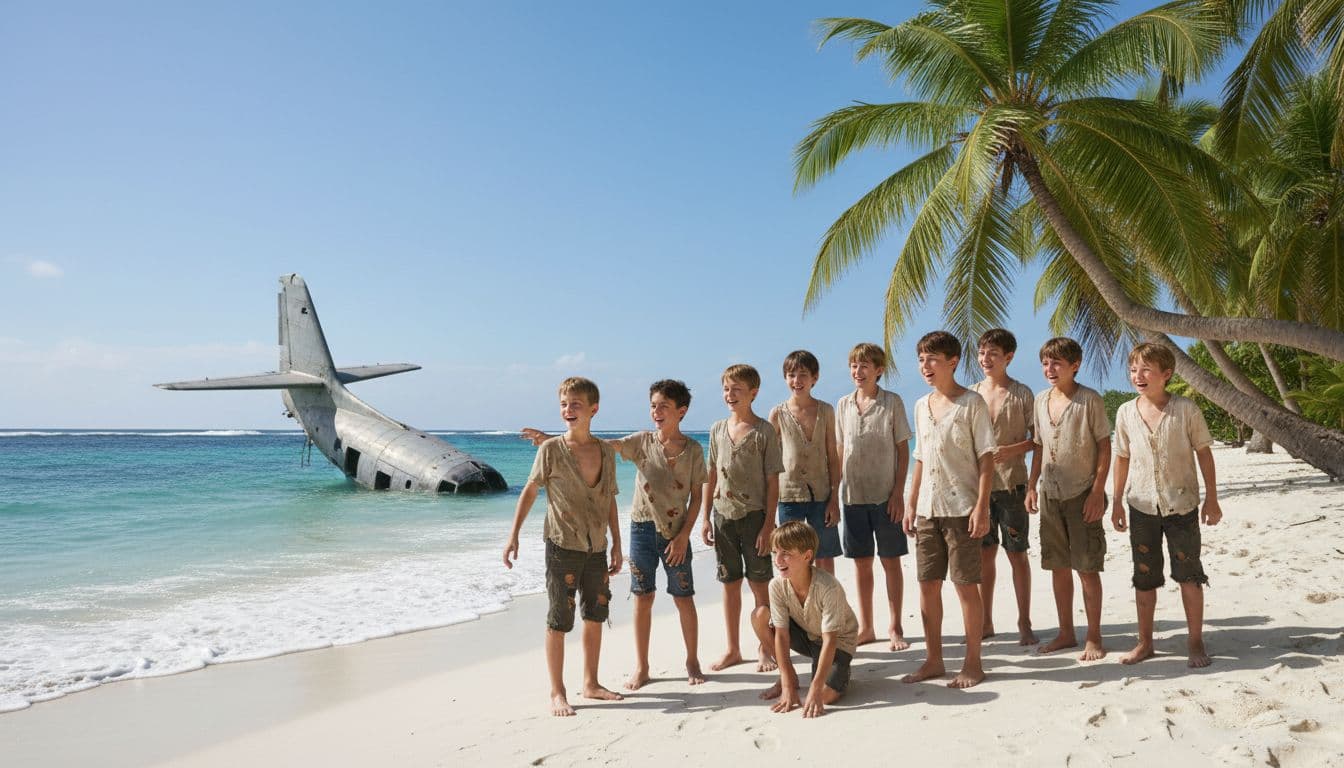
At first, the island almost looks like an adventure movie. There are fruit trees, open beaches, and no adults. Still, the cracks show fast. The signal fire goes wrong. Fear of the “beast” spreads. Jack gets more obsessed with hunting than rescue.
Then the tone darkens. Simon sees the truth that the beast isn’t a monster in the woods. It’s the darkness inside the boys themselves. However, when he tries to tell them, they kill him in a frenzy. That scene is horrifying because it shows how fear can swallow common sense whole.
Piggy’s death pushes the story even closer to the edge. Roger drops the boulder. The conch shatters. In one brutal instant, law, reason, and mercy all go over the cliff together.
After that, Ralph becomes prey. So the lord of the flies climax doesn’t come out of nowhere. It grows from every broken rule, every failed fire, and every time the boys choose impulse over thought.
Why the climax matters so much
This scene hits hard because it changes the boys from stranded kids into something much darker. Ralph’s hunt isn’t only suspenseful, it’s symbolic. He becomes the target because he represents order, memory, and the idea that people should answer to something bigger than appetite.
Jack, on the other hand, rules through fear and force. He promises meat, excitement, and a tribe. That’s a flashy pitch, especially to scared children. Yet the final chase shows the real cost of his rule. Once violence becomes normal, nobody is safe.
There’s also a nasty bit of irony here. The fire that should have rescued them earlier becomes a tool for murder. Then, because the island burns so fiercely, that same fire helps bring rescue at last. It’s messy, cruel, and darkly clever.
If you like drama, this is the scene where the mask falls off. The paint, the chants, the tribal games, all of it leads here. In other words, the climax shows that civilization isn’t as sturdy as people like to think. Strip away rules, add fear, and things can get ugly fast.
What comes after the climax, and why people mix it up
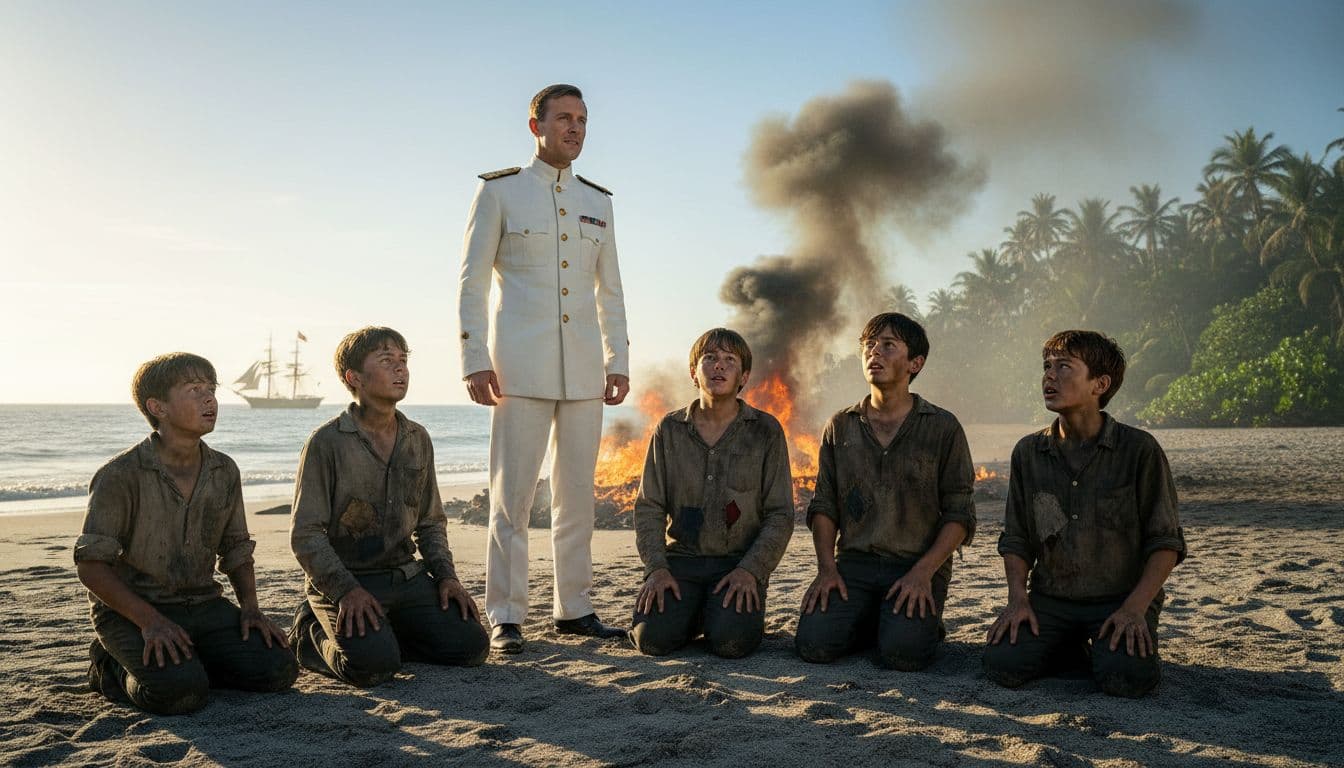
A lot of readers mix up the climax with the ending, and that’s easy to do. The naval officer appears right after Ralph’s desperate run, so the scenes blur together.
This quick breakdown helps sort it out:
| Story part | What happens | Why it matters |
|---|---|---|
| Climax | Jack’s tribe hunts Ralph and burns the island | This is the peak danger and final conflict |
| Falling action | Ralph reaches the beach and meets the officer | The chase ends at once |
| Resolution | Ralph cries, and the boys face what they’ve become | The emotional truth lands |
So, yes, the officer’s arrival is huge. Still, it’s not the highest point of tension. It’s the release after the explosion. The climax is the hunt. The rescue is what comes right after.
Final takeaway
The climax of Lord of the Flies is Ralph’s terrifying hunt through the burning island, not just the neat final image of rescue. That’s the moment when Golding shows, with zero sugar on top, that the boys have crossed the line from disorder into brutality. By the time the officer steps in, the damage is already done. The island is on fire, and so is every illusion the boys started with.
What Is the Climax of Hamlet? The Scene That Finally Explodes
Hamlet isn’t just a play about a sad prince, a skull, and a lot of pacing. It’s a revenge story built like a pressure cooker. The heat rises slowly, the lid rattles, and then everything blows at once.
If you’re wondering what the hamlet climax is, the best answer is the final duel. Still, Shakespeare loves making life messy. That’s why some readers point to an earlier scene instead. Here’s the clean version, without the classroom fog.
The main climax of Hamlet is the final duel
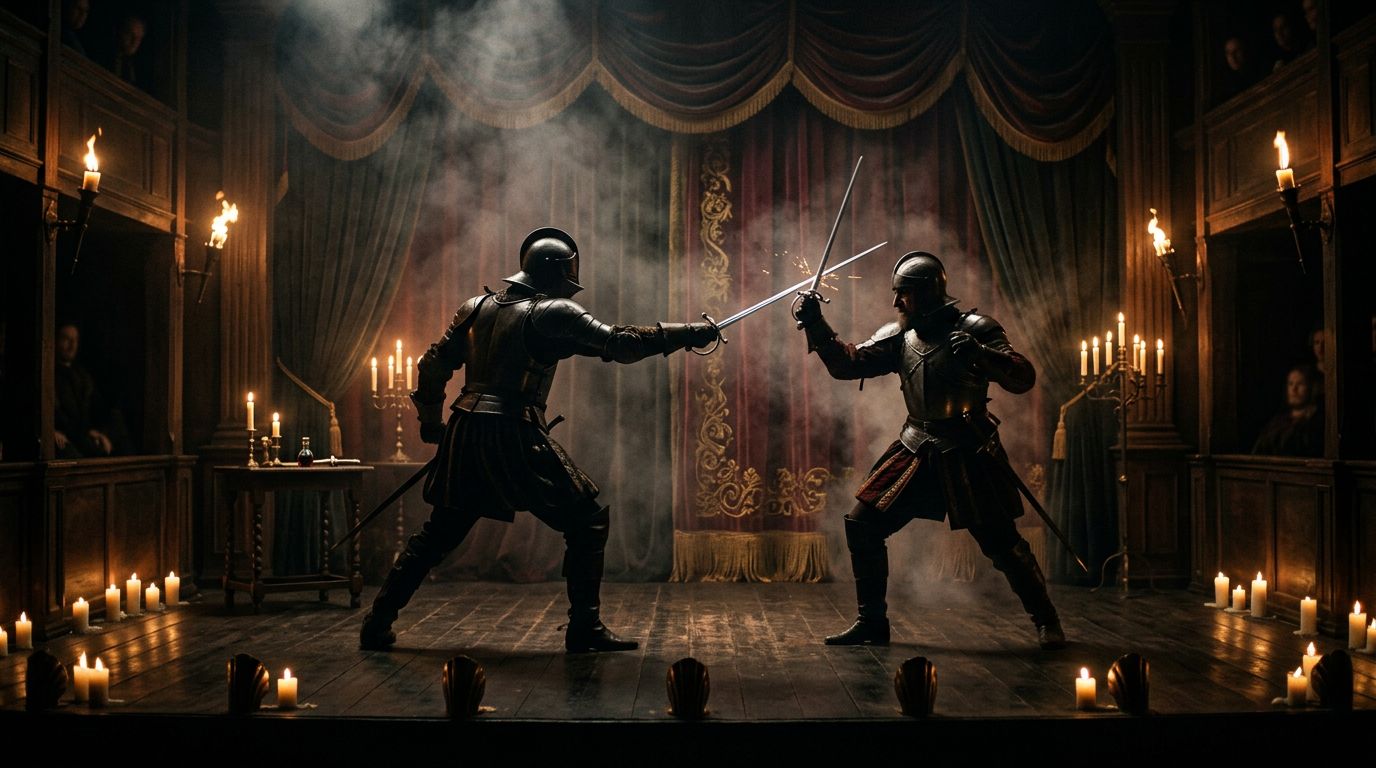
In most readings, the climax comes in Act 5, Scene 2, during the fencing match between Hamlet and Laertes. This is the point where the play’s biggest conflict finally breaks open. Hamlet has spent the whole story circling one task, kill Claudius and avenge his father. In the duel, that long delay ends.
The scene starts like a polite court event. Then it turns savage fast. Claudius rigs the match with a poisoned sword and a poisoned cup. Gertrude drinks the wine by mistake. Laertes wounds Hamlet. Hamlet wounds Laertes back. Laertes confesses the plot. Then Hamlet finally kills Claudius.
That chain of events is why most people call this the true climax. A climax isn’t just a shocking scene. It’s the point where the central struggle hits maximum tension and can no longer stall. After that, the play moves into fallout, not suspense.
The simplest answer is this: the main climax of Hamlet is the deadly duel that ends with Claudius exposed and killed.
This reading also matches common study guides, including SparkNotes’ explanation of the ending. And honestly, it fits the feeling of the scene too. Shakespeare doesn’t give us one neat death. He gives us poison, confession, revenge, and a stage that suddenly looks like a royal crime scene.
Why some readers choose an earlier turning point
Now for the twist. Some teachers and readers argue that Hamlet has more than one peak. If that sounds annoying, it kind of is, but they aren’t making it up.
The biggest alternate choice is Polonius’s death in Act 3. Hamlet hears someone behind the arras, thinks it might be Claudius, and stabs through the curtain. Instead, he kills Polonius. That moment changes everything.
After that, the story can’t go back to brooding speeches and careful tests. Claudius moves harder against Hamlet. Ophelia starts to unravel. Laertes storms back, furious and hungry for revenge. In other words, the play shifts from suspicion to damage.
Some study guides, including IvyPanda’s overview of Hamlet’s climax, describe the tragedy as having two major peaks. Here’s the quick cheat sheet:
| Scene | Why it feels huge | Best label |
|---|---|---|
| The play within the play | Claudius reacts and reveals guilt | major turning point |
| Polonius’s death | The action becomes irreversible | first peak or crisis |
| The final duel | Revenge lands and the court collapses | main climax |
So, if someone says Polonius’s death is the climax, don’t act like they’ve insulted Shakespeare’s haircut. They’re usually talking about structure. That scene is the point of no return. Still, if the question asks for the main climax, the safest and strongest answer remains the final duel.
How Shakespeare builds to the hamlet climax
Part of what makes the final scene hit so hard is the slow build. Shakespeare doesn’t rush Hamlet toward revenge. He makes him hesitate, think, test, doubt, and stall. That delay frustrates some readers, but it’s also the fuel.
Hamlet gets the ghost’s command early. Even so, he wants proof. Then he stages the play within the play to trap Claudius’s conscience. After that, things get worse, not cleaner. Polonius dies. Hamlet gets shipped to England. Ophelia dies. The graveyard scene brings death right to the front of the story. By the time the fencing match begins, doom is basically sitting in the front row.
That careful setup is why the duel feels like more than a random fight. It looks formal on the surface, but the audience already knows it’s poisoned. So every touch, every cup, every line carries dread. A useful breakdown of the final scene’s buildup shows how Shakespeare stacks tension right before the release.
There’s also a cruel symmetry here. Hamlet hates rash action, yet the ending traps him in a burst of it. Claudius, who has controlled the court for most of the play, loses control in seconds. Gertrude dies from the poison meant for Hamlet. Laertes gets caught in his own scheme. Then Hamlet, finally done thinking, acts with brutal speed.
That’s why the hamlet climax feels so satisfying and so bleak at the same time. The revenge lands, yes, but the price is almost comically awful. It’s like waiting five seasons for a scandal to break, then watching the entire cast get wiped out in one finale.
So, what is the climax of Hamlet?
If you need one clear answer, go with the final duel in Act 5, Scene 2. That’s the moment where the revenge plot reaches full heat and Claudius dies. If you want the slightly fancier answer, add that Polonius’s death works as an earlier peak or turning point.
Either way, the play saves its biggest blast for the end. Shakespeare doesn’t close with a soft landing. He closes with a poisoned sword, a dead king, and one unforgettable mess.
-
 Celebrity Info2 months ago
Maya Oakley: A Journey of Lifestyle and Resilience in the Face of Illness
-
 Celebrity Info3 years ago
Shane Oakley: Dr. Michelle Oakley’s Family-Oriented Husband and Sports Enthusiast
-
 Celebrity Info3 years ago
Carl Rosk From Gold Rush | What Happened To Him?
-
 Celebrity Info3 years ago
Freddy Dodge Net Worth, Personal Life, Passions, and Role in Gold Rush
-
 Celebrity Info3 years ago
Mitch Blaschke Net Worth – Age, Personal Life and Role in Gold Rush
-
Celebrity Info2 years ago
Josephine Archer Cameron – Daughter of the Famous Movie Maker James Cameron
-
 Celebrity Info3 years ago
Tyler Mahoney Net Worth, Relationship with Parker Schnabel, And Role in Gold Rush
-
 Celebrity Info3 years ago
Jim Thurber Net Worth – Personal Life and Role in Gold Rush